


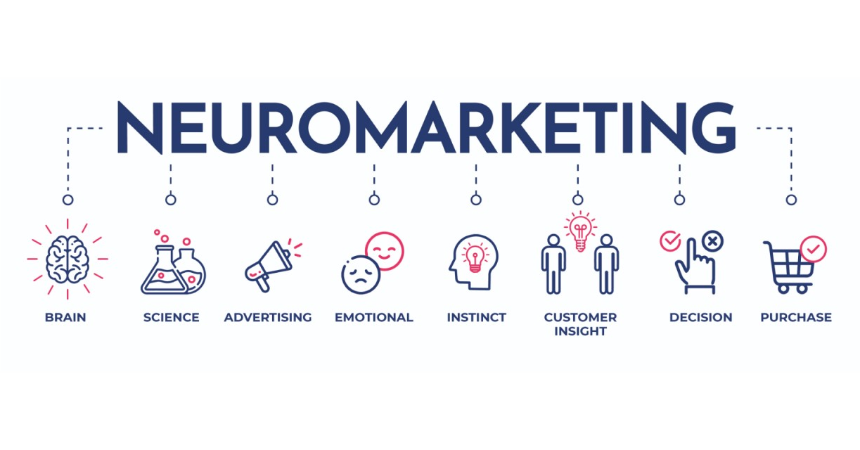
Introduction: What is Neuromarketing and Why Does It Matter?
Neuromarketing is not just a buzzword, it’s a revolutionary approach to understanding how consumers make decisions. In an age where marketing is more competitive than ever, brands can no longer rely solely on intuition, guesswork, or surface-level analytics. Neuromarketing dives deeper, tapping into the unconscious mind" the part of the brain that controls more than 90% of our decisions.
This science-backed strategy blends neuroscience with marketing to influence consumer behavior at its core. And if you truly understand how the brain works, you can create more persuasive, ethical, and high-converting campaigns.
The Science Behind Neuromarketing
The Three Brains Theory: A Marketer’s Map
Neuromarketing begins by acknowledging that humans don’t just have one brain | we have three, functioning together but serving different roles:
-
The New Brain — the rational part that processes facts and logic.
-
The Middle Brain — responsible for emotions and feelings.
-
The Old Brain (Reptilian Brain) — the decision-maker, focused on survival and instinct.
The Old Brain is the real boss when it comes to buying decisions. Even though we believe we’re making logical choices, our decisions are often driven by instinct and only later justified by reason. This insight alone changes how we should speak to our audience.
Why Appealing to the Old Brain Works Best
If you try to sell a product by focusing only on features or data, you’re speaking to the New Brain, which has no authority to make decisions. But the Old Brain responds instantly to certain stimuli-it loves contrast, visuals, stories, and things that are personal or emotional.
That’s why great marketing isn’t about explaining, it’s about triggering a decision.
6 Persuasion Stimuli: How to Speak to the Old Brain
Drawing directly from the strategies discussed in Renvoisé and Morin’s work, there are six key stimuli that effectively engage the Old Brain:
1. Self-Centered Messaging
The Old Brain only cares about me. Your messaging needs to instantly answer: “What’s in it for me?” Generic statements like “We are the best” don’t work. Instead, focus on specific benefits the user will gain.
2. Contrast-Driven Framing
The brain understands contrast easily: before vs. after, with vs. without, pain vs. pleasure. Use clear comparisons to make your message stick.
3. Tangible Inputs
Don’t just tell people, they need to see it. Visuals, metaphors, and physical demonstrations help the brain grasp abstract ideas.
4. Start with the Beginning and End
Our brains are wired to remember first and last impressions. This is why headlines and CTAs matter so much. Capture attention early and finish with impact.
5. Visual Stimuli Over Text
Images are processed 60,000 times faster than words. Your brain notices a face or an emotional image before it even begins reading text. Leverage strong visuals to drive emotional connection.
6. Emotion Over Logic
The Old Brain is emotional. That’s why stories, humor, fear, and desire perform better than statistics or data. Use emotional triggers that align with your customer’s internal motivations.
Practical Applications of Neuromarketing in Modern Business
Storytelling That Sticks
A story is the most powerful communication tool. When you narrate a brand journey, customer testimonial, or mission with emotion and vulnerability, you’re tapping into primal memory systems. The Old Brain listens closely when it feels involved.
Design and UX That Align With the Brain
From website structure to ad layout, your design should guide the brain effortlessly. For instance, placing CTAs where the eyes naturally go, like the top-right corner or beneath headlines results in more clicks.
Pricing Psychology and Decision Fatigue
Ever wonder why you see three pricing tiers? That’s Neuromarketing. The brain prefers to compare and select, not choose blindly. Presenting a “decoy” offer can nudge users toward your desired option.
Ethics of Neuromarketing: Influence, Not Manipulation
Some critics argue that Neuromarketing manipulates consumers. But here’s the truth, every form of marketing tries to influence behavior. What makes Neuromarketing ethical is intent.
If you use brain science to truly help your audience solve a problem, reduce confusion, or make smarter decisions, you’re creating value not deception.
Real-World Success Stories
Brands like Apple, Coca-Cola, and Amazon all use Neuromarketing principles. Think about the minimalist Apple packaging, Coca-Cola’s emotional ads, or Amazon’s personalized homepage. They’re not just intuitive, they’re brain-friendly.
Even small businesses can apply these techniques: by using customer-centric messaging, emotional storytelling, and simplified choices, you can see a dramatic increase in conversions.
SEO Meets Neuromarketing: A Match Made in Marketing Heaven
Neuromarketing is powerful, but paired with SEO, it’s unstoppable. Here’s how:
-
Headline Optimization : Use emotional power words to increase CTR.
-
Meta Descriptions : Trigger curiosity or self-interest to improve engagement.
-
User Intent : Write content that answers emotional and logical questions.
-
UX & Mobile Optimization : Align page structure with how the brain scans information above-the-fold content, bullet points, and clear CTAs.
When your content pleases both Google’s algorithm and the Old Brain, you win on both fronts.
Conclusion: Neuromarketing is the Future of Ethical Persuasion
Neuromarketing gives you the roadmap to connect with your customers on a deeply human level. It teaches us that persuasion isn’t about pressure, it’s about understanding the brain and speaking its language.
Whether you’re crafting an ad campaign, building a landing page, or pitching your product, if you tap into the primal brain, you can create a message that isn’t just seen, but felt.
So if you’re ready to turn browsers into buyers and followers into fans, it’s time to stop marketing to the brain you see and start marketing to the brain that decides.
FAQs on Neuromarketing
Q: Is Neuromarketing ethical?
A: Yes, when used responsibly. It's about understanding behavior, not manipulating it.
Q: Can small businesses use Neuromarketing?
A: Absolutely. You don’t need a neuroscience lab—just clear messaging, visuals, and an understanding of human behavior.
Q: How can I apply this today?
A: Start by rewriting your landing page headline to focus on the user’s gain. Use contrast, emotion, and clarity to guide decisions.